
Souvenir ideas for gift shops, past the usual nine
Search for souvenir ideas for gift shops and you get the same nine products in a different order. Magnets. Keychains. Postcards. Shot glasses. Mugs. Tees. Plush. Snow globes. Ornaments.
That list is not wrong. It is the spine of the category and it pays the rent. The problem is that it is also the list your competitors read, which is why nine shops on the same street carry the same stock and compete on nothing but position.
This is about the rest of the shop.
Start by separating the two jobs stock does
Most buying decisions get easier once you stop treating all inventory as one thing. Gift shop stock does two different jobs and they have opposite requirements.
Volume stock pays the bills. Cheap, familiar, no explanation needed, bought without deliberation. Magnets and stickers live here. It should be reliable, well priced, and you should feel nothing about it. If a competitor undercuts you on a magnet, let them.
Signature stock is why someone chooses your shop over the one forty feet away. It is the item people describe when they recommend you. It can be slower, dearer, and harder to source, and it earns its shelf space by making everything around it sellable.
Most shops are 100% volume stock and wonder why foot traffic tracks the weather and nothing else.
Categories worth testing
Ordered roughly by how easy they are to try.
Local consumables. Honey, hot sauce, coffee, brittle, jam. Genuinely underrated. They get eaten, which means returning visitors rebuy, and they are unmistakably regional in a way a printed mug is not. Watch shelf life and supplier consistency, which is where they usually fall down.
Work from named local makers. Prints, ceramics, jewellery, small woodwork. Slower turn and thinner margin than you would like, and disproportionately good for how the shop is perceived. Name the maker on the shelf talker; it is half the value.
Field guides and small books. Birds, trails, geology, local history. Steady sellers in any town with an outdoors, and they signal that a shop takes its place seriously.
Enamel pins and patches. Cheap, collectible, no sizing, near-zero storage. They suit a series better than almost anything else, because people who buy one come back for the next.
Anything with a mechanism. Something that opens, unfolds, pops, or reveals. This is the category most shops skip entirely and it is where the attention is, because a product with a moment attached gets filmed.
Practical items a visitor forgot. Sunscreen, ponchos, phone cables, blister plasters. Not romantic. Reliable margin, and roughly three quarters of it is impulse.
Judging a supplier before you commit
The stock is only half of it. A good product from a supplier who cannot reorder is a one-season product.
Ask five things:
- What is the reorder lead time? If your bestseller takes twelve weeks to replace, it will be out of stock every peak.
- What is the real minimum? Not the website number. The number for a shop your size that wants to test.
- Who else in this town carries it? If the answer is vague, assume everyone.
- Can I get exclusivity in my area, and what does it cost? Often available, rarely offered unprompted.
- What does it arrive in? Packaging tells you how seriously they take the product, and it is the part your customer touches first.
Question three is the one that matters most and the one buyers ask least. A supplier who will sell the same design to every shop on the street is selling you a commodity regardless of how nice it is.
The exclusivity question, properly
Exclusivity gets treated as a nice-to-have. For a souvenir shop it is closer to the whole game.
A visitor with an afternoon will walk into four shops. If all four have the same stock, they buy from whichever is most convenient, and you are competing on rent and footfall rather than on anything you control.
One genuinely exclusive item changes the comparison. It gives the visitor a reason to buy here rather than there, and it gives your staff something to actually talk about.
The strongest version is a design made for your shop that exists nowhere else. Not your logo on a catalogue item, which every supplier offers and which reads as generic no matter whose name is on it, but artwork created for your business.
Pricing the tiers so they work together
A shop that stocks well across all three jobs still loses money if the prices bunch.
Visitors arrive with a rough budget and spend it in tiers. There is a grab price, where buying is faster than thinking. There is a gift price, where they are buying for someone else and want it to look like it cost something. And there is a keepsake price, where they are buying the trip itself and will pay considerably more than they expected to.
Most shops stock the first tier heavily, the second thinly, and skip the third. That is why average transaction value stalls: there is nothing for the customer who came in willing to spend properly.
You do not need many items at the top tier. One or two, well presented, with room around them. The point is not that everyone buys them. The point is that the people who would, can, and that their presence makes the middle tier look reasonable rather than expensive.
Reading your own numbers
Three figures tell you more than any trend piece, and your till already has them.
Units per transaction. If it sits near one, your counter is not working and nothing is prompting a second item.
Sell-through by week, not by season. A product that clears 80% over five months is a different product from one that clears 80% in three weeks and then sits. The second one wanted a bigger order.
What gets handled. Not a number, but your staff have it. Anything picked up often and bought rarely has a price or placement problem, and both are free to fix.
What that looks like in practice
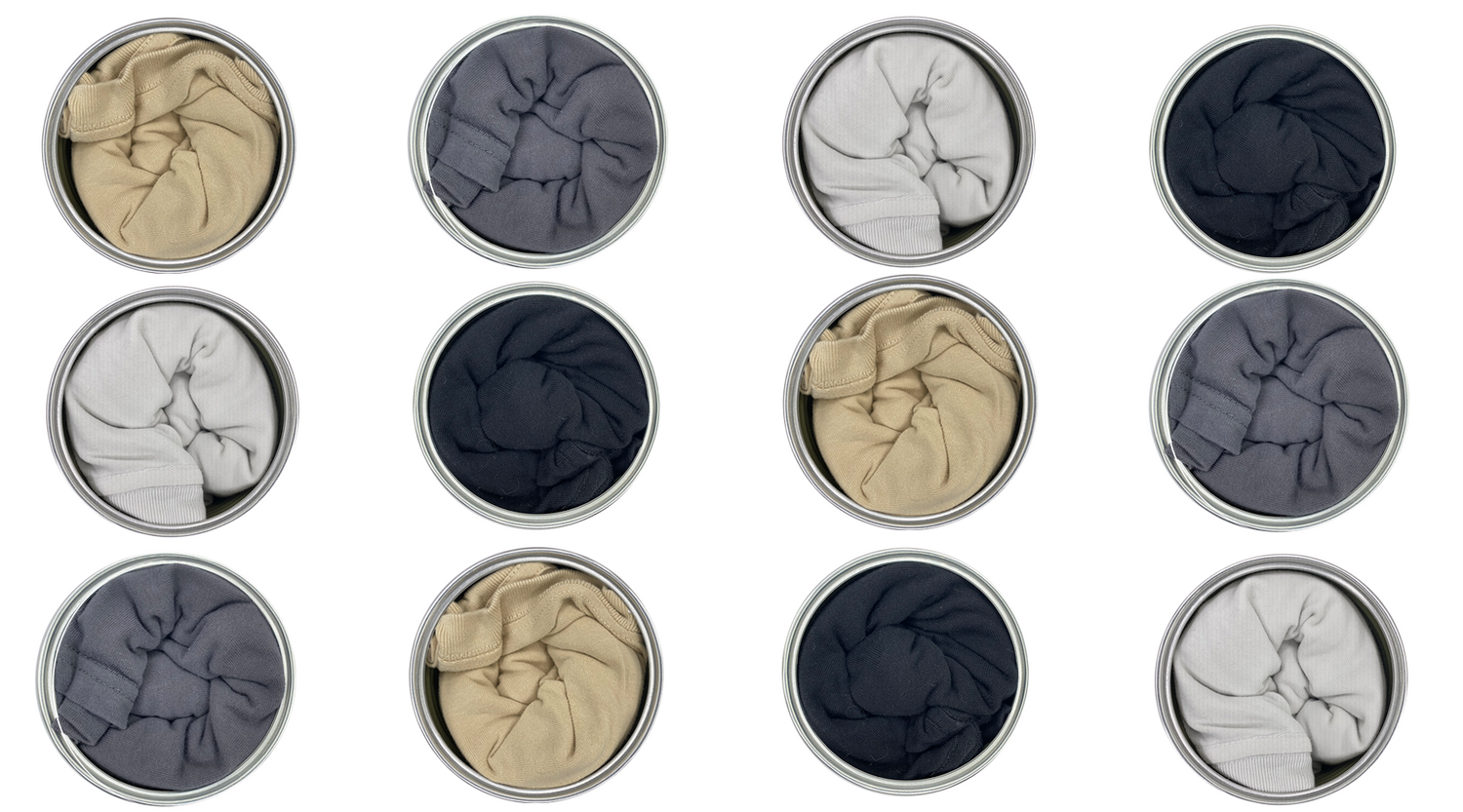
Our version is a shirt folded into a printed aluminium can with a pull tab. Each stockist gets original artwork nobody else has, and the can is built to be kept rather than binned.
Three things make it work as signature stock rather than volume stock. It cannot be bought forty feet away. Opening it is an event, which is why videos of people doing it have passed 100 million views across Instagram and TikTok, one reel reaching 8.3 million on its own. And the can survives on a shelf at home, so it keeps the shop visible long after the trip.
Jacks Surfboards carries them across more than five retail locations.
Public quantity tiers start at 72 units, which is a real test rather than a commitment, and design is handled in house. Details on the custom cans page.
When to kill something
Every shop carries stock it is subsidising, kept because it was paid for once and nobody wants to admit the order was wrong.
That inventory is not an asset. It is rent charged against the shelf space your sellers need, and it compounds: dead stock makes the display look picked over, which makes everything near it harder to sell.
A workable rule is one full season. If an item has not cleared half its run by the end of its first proper season, it is not going to. Mark it down while it still looks fresh rather than a year later when it obviously does not, take the loss, and put the space back to work. The money is already spent either way; the only variable left is how long the shelf stays occupied.
A shape for the year
If you are rebuilding a mix from scratch:
- 60% volume stock. The usual nine, priced sharply, never out of stock in season.
- 25% local and regional. Makers, consumables, books. This is what makes the shop feel like it belongs to the town.
- 10% practical. The forgotten-item wall near the till.
- 5% signature. One or two things nobody else can sell.
The last five percent is the part most shops never get to, and it is the only part that changes whether anyone remembers where they bought something.
More on judging what will move in best selling souvenirs, on placement and register strategy in best selling gift shop items, and on the format itself in what a shirt in a can actually is.