
Museum gift shop merchandise that answers to the mission and the budget
A museum store buyer has a harder job than a gift shop buyer and rarely gets credit for it.
A gift shop needs stock that sells. A museum store needs stock that sells, connects to the collection, survives a board member picking it up and asking what it has to do with anything, and does not undercut the institution's seriousness. Four constraints instead of one.
The usual result is a shop split down the middle: a scholarly section nobody buys from, and a rack of generic souvenirs that could be from anywhere. Both halves are a compromise and everyone in the building knows it.
The test that resolves most of it
One question settles more buying decisions than any category list: could a visitor explain why this is here?
Not why it is nice. Why this object is in this building. If a visitor can answer in a sentence, the item belongs. If the only honest answer is "they had to sell something," it is generic stock wearing your logo.
That test does more work than it looks like. It rules out most branded drinkware and most plush. It rules in things with no obvious connection, if the connection is real: a garden museum selling seeds, a maritime museum selling rope work, an art museum selling the specific pigment a painter was known for.
What sells, in institutions specifically
Books, still. Slower and thinner than everything else, and essential. A museum store without books stops reading as a museum store. Accept the margin.
Anything tied to the current exhibition. Urgent, time-bound, and the closest a museum store gets to a drop. Visitors who have just spent ninety minutes with something want a piece of it, and that appetite evaporates when the show closes.
Children's items with actual content. Kits, activity books, specimen boxes. Parents buy educational things without guilt in a way they do not buy toys.
Reproductions done properly. A good print of a work in the collection is the most defensible item in the shop. A bad one is worse than nothing.
Local and regional makers. Particularly strong for institutions with a place-based mission, and it puts money back in the community the board answers to.
One thing people photograph. Rare in museum retail and the gap is obvious. Institutions are extremely good at producing things worth looking at and extremely reluctant to sell anything with a sense of humour.
Conservation and mission funding, done credibly
For an aquarium, a zoo, a botanical garden or anything with a conservation remit, merchandise that funds the mission is an easy internal sell and a hard external one, because visitors have heard it all before.
What separates credible from decorative:
A named recipient. "Supports conservation" is a mood. A named organisation is a fact.
A number per unit. Not "a portion of proceeds." An amount.
Something the visitor can check. This is the one nearly nothing passes. If the entire claim happens offstage and the visitor is asked to trust a swing tag, they will file it with every other unverifiable claim they saw that week.
If your store can show a visitor what their purchase funded, that is a genuinely different product from one that says it does good.
Getting it past the board
The people who approve a new vendor are not evaluating sell-through. They are evaluating risk to the institution's reputation.
What lands:
- Mission connection stated in one sentence. If it takes a paragraph, it will not survive the meeting.
- A small first order. Approving a test is much easier than approving a relationship. Public tiers starting near 72 units are designed for exactly this.
- Provenance you can name. Who made it, where, from what. Boards ask, and "a supplier" is not an answer.
- A concrete claim, not a values statement. Institutions are held to a higher standard on this than retailers, and rightly.
Exhibition merchandise without the dead stock
The recurring trap is ordering exhibition-specific stock in quantities that assume the show sells out, then carrying the remainder for years in a stockroom.
Three habits help. Order for the first six weeks, not the run, and keep a reorder path open. Favour items that survive the show's end: a design that references the theme rather than the exhibition title stays sellable afterward. And treat anything printed with dates as genuinely disposable, ordered short on purpose.
The shop is part of the visit
Retail sits at the end of the route, which museums treat as an accident of architecture and visitors experience as the ending of the story.
That placement is worth using. A visitor arriving at the shop has just spent an hour or more with your collection and is at peak willingness to take something of it home. What they meet at that moment matters more than any other square metre of retail in the building.
Practically: the first thing visible from the entrance should connect to what they just saw, not be the till or a rack of discounted stock. Exhibition merchandise belongs at the front while the show runs, not filed alphabetically among evergreen items. And the highest-value keepsake should be visible from the door rather than in a case at the back, because the people willing to buy it are deciding in the first ten seconds.
Working with the staffing you actually have
Museum retail is frequently run by volunteers or by staff whose main job is something else, which shapes what stock can succeed.
An item needing explanation will not sell unless everyone behind the counter can explain it, and in a volunteer rota that means the explanation has to fit on a card. This is a real constraint and it quietly kills good products.
Two things help. Write the shelf talker yourself rather than using supplier copy, in one sentence, answering only "why is this here." And favour items whose story is visible in the object: a reproduction of something on the wall upstairs needs no training, whereas a product whose merit is in its supply chain needs a briefing nobody will get.
Where the can fits an institution
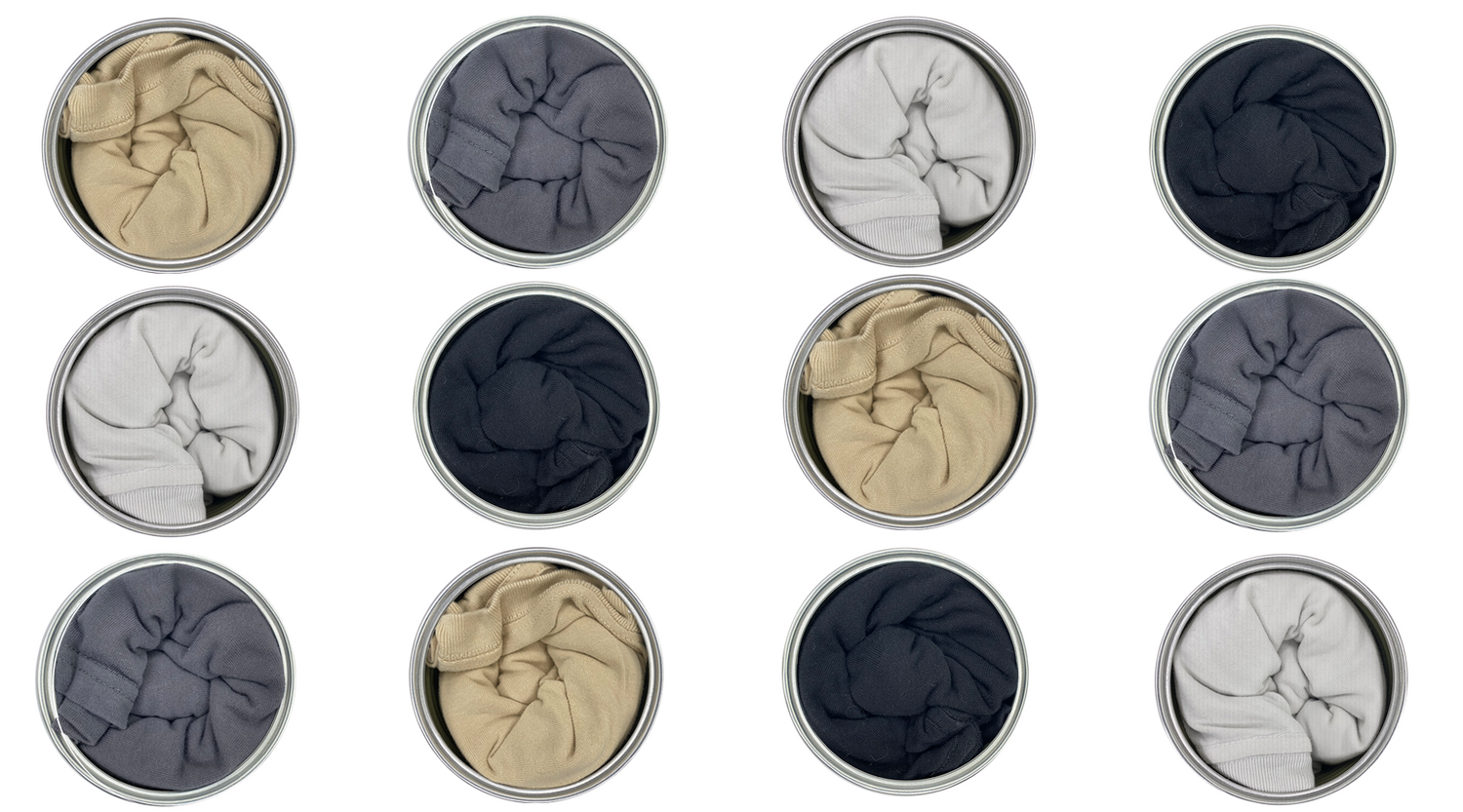
Being direct, since this is our product. A shirt sealed in a printed aluminium can, with artwork made for your institution and available nowhere else.
On the four constraints: it sells because opening it is an event people film, it connects if the artwork comes from the collection or the mission rather than being a logo, it survives the board question because the artwork is yours and original, and it does not cheapen anything because it is a 210 GSM garment dyed tee in a container people keep rather than a giveaway blank.
On mission funding, every activated can directs $0.50 to a cause the visitor chooses at cannedgoods.love. The options are ocean and river plastic cleanup, tree planting, food support, school funding, bee protection, and seagrass planting. The visitor scans the card and picks it themselves, which is the verification part most conservation merchandise cannot offer.
Design is handled in house, and quantity tiers start at 72. Details on the custom cans page.
Two numbers worth tracking
Museum retail is usually measured on total revenue, which hides everything useful.
Spend per visitor, not per transaction, is the figure that tells you whether the shop is working. It accounts for the people who walked past without stopping, which transaction data silently excludes. A rise in spend per visitor after a change means the change worked; a rise in total revenue might just mean attendance was up.
Attach rate on exhibition items during a show tells you whether the merchandise is connected to the thing people came for. A low rate during a well-attended exhibition is the clearest possible signal that the stock is generic, and it is a much faster read than waiting for the season to close.
The short version
Buy against one question: could a visitor explain why this is here. Keep books even though the margin is bad. Treat exhibitions as drops and order short. On conservation claims, name the recipient, name the number, and give the visitor something to check. Then leave one slot for something nobody else can sell, because that is the item people will mention to someone else.
More on stock that clears in best selling souvenirs, and the format in what a shirt in a can actually is.