
How to tell if a souvenir will sell, before you've spent the money
Every shop owner I talk to has the same box in the back. The order that seemed obvious in January and hasn't moved since.
I've got my own version of that box, so this isn't me lecturing anyone. But I've now watched a lot of shops decide what to stock, and the ones who get it right ask a few specific questions before they order rather than after.
The five questions
Will it fit in a bag that's already full?
This kills more stock than anything else and it's the one people skip because it feels too obvious. Your customer flew in with a carry-on and they're doing volume maths on everything they pick up. Heavy loses. Fragile loses. Awkwardly shaped loses. Doesn't matter how nice it is.
If you're in a drive-to town this matters less and you can sell heavier things. Know which kind of town you're in.
Could they buy this forty feet away?
Walk into the two shops nearest you and write down everything you all three carry. Whatever's on that list is commodity stock. It'll sell, it should be there, and it gives nobody a reason to pick you.
Most shops have never done this walk. The ones who have usually come back a bit rattled.
Can someone say yes in under five seconds?
There's a price under which buying is faster than thinking about it. Above it, your customer starts comparing against dinner. You know your number. Stock that sits just above it moves noticeably worse than stock just below, and most buyers never test where the line actually is.
Would anyone film themselves opening it?
This one's newer and most buying lists still don't include it. A product someone films reaches people who were never in your shop and weren't going to be. That's free distribution from a customer who already paid you.
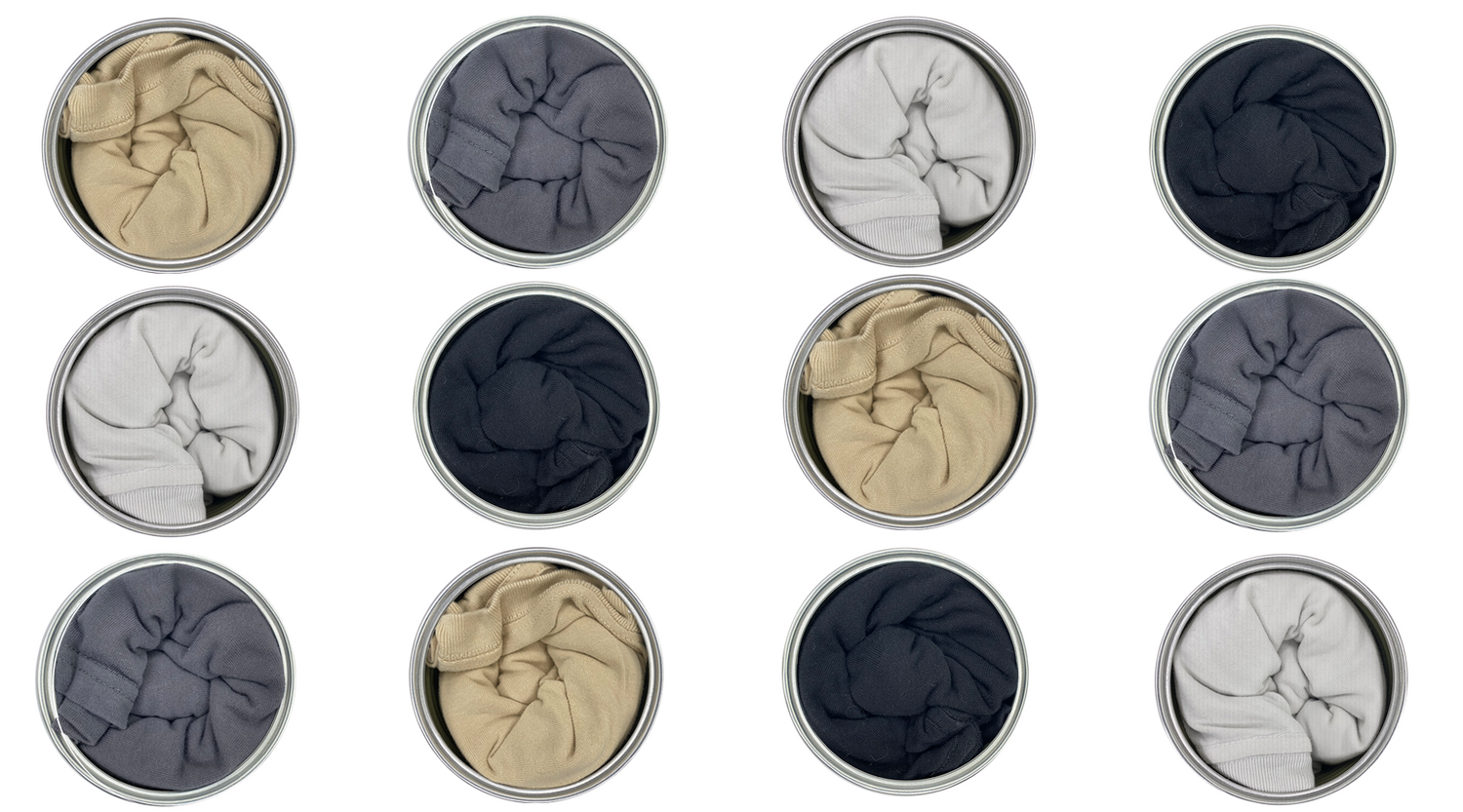
Almost nothing in a standard gift shop does this. Nobody's ever filmed a fridge magnet. That gap is the whole opportunity, and it's why I put shirts in cans instead of polybags.
Will your staff explain it without being trained?
I learned this one late. We had a product where the good bit was in the supply chain, and it needed a paragraph to land. It died on the shelf, not because customers didn't care but because nobody behind the counter could get through the paragraph on a busy Saturday.
If the story isn't visible in the object, or can't fit on a shelf card in one sentence, it won't sell no matter how good it is.
Running a test that gives you a real answer
Most "tests" aren't tests. The new thing goes on a bottom shelf behind the till, the incumbent keeps the counter, and everyone agrees a month later that it didn't work.
Four things make it real.
Give it a season, not a week. Foot traffic swings wildly by day and by weather. A fortnight is the absolute minimum before the number means anything.
Give it actual placement. If it doesn't get a proper facing, you haven't tested the product, you've tested a bad spot.
Track units, not revenue. You're answering one question: do people want this. Units per week answers it. Revenue confounds it with price.
Write down what a pass looks like before you start. Buyers are extremely good at retroactively justifying their own orders, and a number agreed up front is the only real defence against that.
The season you test in matters more than people think
Here's something that took me a while to see. Peak season hides everything.
In a tourist town in August, mediocre stock sells. The visitor has fifteen minutes, there's nobody else to buy from, and they'll take what's there. You learn almost nothing.
The shoulder season is where the truth is. When someone's browsing with time and real choice, whatever they pick is something they actually wanted. Anything that moves in May is a genuine seller. Anything that only moves in August was bought because it was in front of them.
So if you're testing, test in the quiet months, even though that feels backwards.
What your staff know that your till doesn't
Ask the people behind the counter which things get picked up and put back down.
That's not in any report and it's the most useful signal in the shop. An item handled ten times a day that never sells isn't a bad product. It's a price problem or a placement problem, and both are free to fix. You just have to ask, because nobody volunteers it.
I've had shops tell me a can sat for two weeks and then walked out the door constantly once they moved it from a shelf to the counter. Same product, same price, same week.
The thing nobody puts on a buying checklist
Price tiers. Not price, tiers.
Visitors turn up with a rough budget and spend it in bands. There's a grab band, where buying beats thinking. There's a gift band, where they're buying for someone else and want it to look like it cost something. And there's a keepsake band, where they're really buying the trip and will spend more than they planned to.
Most shops stock the first band heavily, the second thinly, and skip the third entirely. Then they wonder why average spend won't move. There's nothing in the shop for the person who walked in willing to spend properly.
You don't need many things at the top. One or two, given room. Most people won't buy them, and that's fine. Their presence makes the middle band look sensible instead of expensive, which lifts everything.
When to kill something
Every shop subsidises stock it won't admit was a mistake, because the money's already spent.
That inventory isn't an asset. It's rent charged against the shelf your sellers need, and it compounds, because a display with dead stock in it looks picked over and drags down everything near it.
One full season is a fair rule. If half the run hasn't cleared by the end of its first proper season, it isn't going to. Mark it down while it still looks fresh rather than a year later when it obviously doesn't, take the hit, and put the space back to work.
Two mistakes I see constantly
Buying what you like. This is the hardest one to catch in yourself. Your taste got calibrated by living there. Your customer's got calibrated by arriving on Tuesday with no idea what the local thing even is. Those are different people, and only one of them is holding a wallet in your shop.
I've done this. I've picked designs I loved that did nothing, and watched something I was lukewarm on sell out.
Spreading thin instead of going deep. Twelve variants at two each feels like choice. It reads as clutter, and sparse stock looks like leftovers. Three variants faced properly will outsell twelve crammed onto the same shelf, because the customer can actually see them.
What I'd want to know if I were buying
If a supplier can't answer these, that tells you something on its own.
How long does a reorder take? If your best seller takes twelve weeks to replace, it'll be out of stock every peak, which is worse than not carrying it.
What's the real minimum for a shop my size? Not the website number. The number for someone who wants to test without committing a season's budget.
Who else in this town has it? This is the question buyers ask least and should ask first. A vague answer means everyone.
Can I get exclusivity in my area? Often available, almost never offered unless you ask.
What does it arrive in? You'd be amazed what the packaging tells you about how seriously someone takes their own product. It's also the first thing your customer touches.
Where I'd start
If you want one thing to do this week, do the walk. Two nearest shops, write down the overlap. It takes twenty minutes and it usually explains why margin feels tight and why nobody's telling their friends about your store.
Then pick one item nobody within a mile can sell, give it real space, and see what happens in the quiet months.
If you want to know how we handle that last part, ours is a shirt sealed in a can with artwork made only for your shop. Details are on the custom cans page, the format's explained in what a shirt in a can actually is, and there's more on picking stock in best selling souvenirs.