
What to put by the register: the impulse buys that work
The counter is the only part of your shop that every single customer stands in front of. Not the window, not the good display you spent a weekend on. The counter.
Everyone who buys something, everyone who asks for directions, everyone who comes in to use the bathroom and feels guilty about it. They all end up at the same three square feet.
And in most shops that space is holding a card reader, a jar of pens, a stack of flyers for a boat tour that stopped running in 2023, and a bowl of mints.
Why the counter works
It isn't magic, it's three boring things happening at once.
The customer has already decided to buy. The hard part is done. They're not deciding whether to spend money anymore, only how much, and that's a much smaller question.
They're standing still. Everywhere else in the shop they're moving and scanning. At the counter they're stationary with nothing to do for fifteen seconds while you ring them up.
And they've got a card out. The friction of paying is already paid.
That combination doesn't exist anywhere else in the building, which is why an item that dies on a shelf can sell steadily at the till.
What actually belongs there
The rules are tighter than people expect.
Cheap enough not to think about
There's a number in every town above which people start doing arithmetic. Below it, buying is faster than deciding. You already know roughly what yours is. Counter stock lives below it, full stop.
Small enough to hold
If it needs two hands or a bag, it's not counter stock. It's shelf stock you've put in the wrong place.
Understandable in two seconds
No explanation, no sizing, no options. The moment a customer has to ask a question, you've lost the window, because you're mid-transaction and they don't want to hold up the queue behind them.
Touchable
Behind glass converts worse. Much worse. If someone can pick it up and turn it over, they're significantly more likely to buy it, and a counter item that can't be handled is wasting the one advantage the position gives you.
What does not belong there, no matter how well it sells
Apparel. Anything with sizes. Anything fragile. Anything you have to explain. Anything over your town's thinking threshold.
I've watched shops put their best-selling item on the counter because it's their best seller, and watch it do worse there than it did on a shelf. Best seller and best counter item are different jobs. The counter rewards speed, not quality.
The stuff that reliably works
Stickers. The most dependable counter item in the trade. Cheap, weightless, endlessly variable, and people buy three without blinking. They'll never make your shop famous but they'll pay for the counter.
Pins and patches. Slightly higher ticket, collectible, no sizing. Good for repeat customers because there's always a new one.
Magnets and bottle openers. Boring and consistent. Stock them, expect nothing dramatic.
Local sweets. Fudge, brittle, taffy, chocolate with the town on it. Consumable, which means returning visitors rebuy, and it's the one counter category where "made here" genuinely matters to people.
Lip balm, hand cream, the forgotten small thing. Underrated. Roughly three quarters of travel-essential purchases are impulse, and a visitor who realises they forgot something buys it immediately and gratefully.
One thing nobody else has. This is the slot most shops leave empty, and it's the only one that changes anything.
The exclusive slot, and why the counter is the right place for it
Everything above this is undifferentiated. It sells, it should be there, and it makes your shop interchangeable with the one down the street.
An item nobody else carries does something none of that stock can: it gives a customer a reason to mention your shop to someone else. Nobody has ever recommended a store for its magnet selection.
The counter is the right home for that item because it guarantees every customer sees it, including the ones who came in for something else entirely. A distinctive product on a back shelf is a product most of your traffic never learns about.
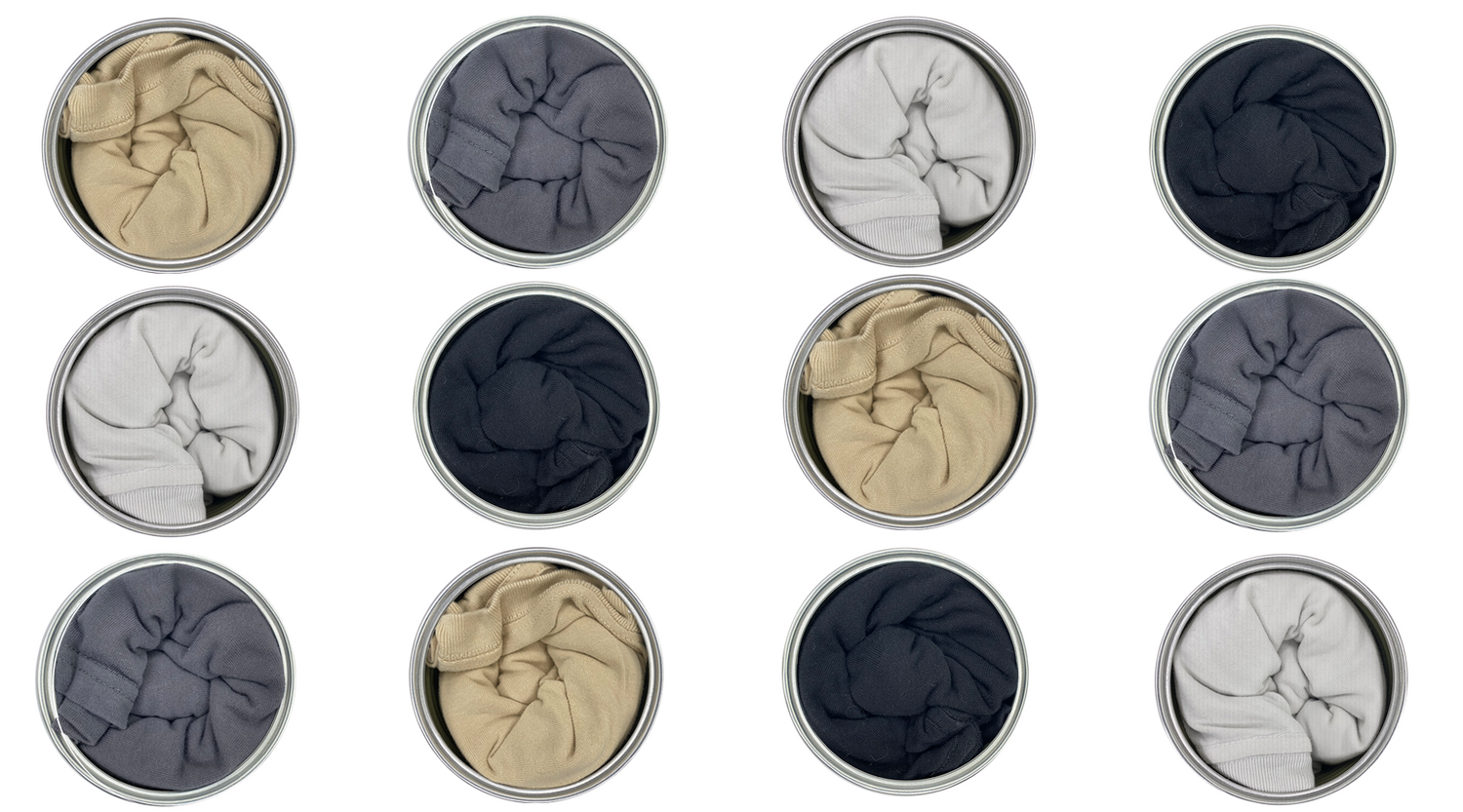
This is the argument I make to shops about cans, so I'll be upfront that it's self-interested. A shirt sealed in a can is roughly the size of a stubby beer, it sits on a counter without taking much room, people pick it up because they can't immediately tell what it is, and the artwork on it exists in exactly one shop. A donut shop here in Sedona sold over 6,000 of them in a single year, and a lot of that was counter traffic rather than people arriving to buy a shirt.
The mistake I see most often
Shops treat the counter as storage for things that didn't sell elsewhere.
It's understandable. The item cost money, it's not moving, and the counter gets more traffic than anywhere else, so moving it there feels like a rescue. It almost never works, and it costs you twice.
It costs you because a slow item is usually slow for a reason that the counter can't fix. If it's too expensive to be an impulse buy, or needs explaining, or requires a size, more eyeballs won't change that.
And it costs you because that position could have held something that does work. The counter is the most valuable surface you own per square inch. Filling it with your worst-performing stock is the retail equivalent of renting out your front window to store boxes.
If something isn't selling, mark it down and clear it. Don't promote it to the best spot in the building.
Rotating it
Counter stock goes blind. Regulars stop seeing it after a few weeks, and staff stop mentioning it.
The fix costs nothing: change something every few weeks. Not all of it, just one position. Move the sweets where the stickers were. Put the new thing where the old thing was. It resets attention for both customers and the people working there, and it's the cheapest merchandising you'll ever do.
Seasonal is the easy version. A single item that exists only in December does more for December than a discount does.
How much is too much
There's a real limit, and crossing it costs you.
A counter with fifteen things on it stops being a display and becomes clutter, and clutter reads as a shop that's struggling. It also slows the transaction, which annoys the queue.
Three to five distinct items is about right for most counters. Faced properly, with room around them. If you want to carry more variety, rotate rather than accumulate.
The other limit is physical: the customer needs somewhere to put their bag and sign for things. A counter you've made unusable is worse than an empty one.
Pricing at the counter
Two things worth knowing, and they pull in opposite directions.
Round numbers move faster at the till. Someone mid-transaction doing mental arithmetic on $7.43 is someone who puts it back down. Whole dollars keep the decision fast, which is the entire point of the position.
But don't reflexively price counter stock at the bottom of your range either. An item priced conspicuously below everything around it reads as clearance, and clearance is not an impulse buy, it's a bargain hunt. Those are different customers in different moods.
The version that works is a clean number that sits comfortably under your town's thinking threshold, not a number that looks like you're trying to get rid of something.
Ask your staff, because the till won't tell you
The most useful counter data in your shop isn't in any report.
Ask whoever works the register which things get picked up and put back down. That tells you what's attracting attention but failing to close, and almost always the problem is price or position rather than the product. Both are free to fix.
I've had a shop tell me a can sat untouched for two weeks, then sold steadily once they moved it from a shelf to beside the till. Same product, same price, same week. The only thing that changed was that people could reach it while they waited.
What I'd do this week
Clear the counter completely. Everything off.
Then put back only what passes all four tests: cheap, small, obvious, touchable. Most shops discover half of what was there fails at least one.
Fill the gap with three to five things, give them room, and make one of them something nobody within a mile can sell.
Then ask your staff in a fortnight what people are picking up.
If you want to know how the exclusive slot works on our side, the custom cans page covers it, what a shirt in a can actually is explains the format, and there's more on judging stock before you buy it in how to tell if a souvenir will sell.