
Brewery merch ideas that people wear outside the taproom
Every brewery sells shirts. Almost none of them sell shirts people wear when they are not in the taproom.
That is the actual test, and it is worth being honest about how most brewery merch ideas fail it. A logo on a blank tee is a uniform. Regulars buy one out of loyalty, wear it to mow the lawn, and never buy another. The rack stays full, the reorder never happens, and merch quietly becomes a cost centre that everyone agrees is "good for brand."
Why the logo tee stalls
Three reasons, and none of them are about quality.
It asks the customer to advertise you for free. People will do that, but only if the thing looks good enough that they would have worn it anyway. A chest logo on a heather grey blank does not clear that bar. It is a favour, and people run out of favours.
It says nothing. Your beer has a point of view. Your taproom has a point of view. A logo has no point of view, it just identifies. Anyone who has been in your taproom already knows who you are.
It never changes. Merch that is always available is never urgent. There is no reason to buy today rather than next visit, and next visit becomes never.
What regulars actually wear
The brewery merch that leaves the building tends to fall into a few patterns.
A phrase from the brand, not the name of the brand. If you have a line you actually say, that line on a shirt outperforms your wordmark every time. Bierstadt in Denver built a brand on doing lager the slow, correct way. "Some things are worth the wait" is a shirt. A Bierstadt logo is a receipt.
The beer, not the brewery. A specific release with a specific design has more personality than a company mark, and it gives you a reason to make a new one next season.
In-jokes that reward regulars. A reference only someone who drinks there gets is a badge. Outsiders ask what it means, which is the entire point.
Something that is not a shirt. Glassware, bottle openers, enamel pins, patches, caps. Lower risk, no sizing problem, and they sit at the counter where people buy without deciding.
Collaborations. A can with the coffee roaster down the street, a shirt with a local illustrator. Two audiences, one product, and both parties promote it.
The drop, and why it outsells the rack
The single biggest structural change most taprooms can make is to stop treating merch as permanent inventory.
A rack of always-available shirts generates no urgency. A limited run with a date does. It is the same mechanism as a seasonal release, which your customers already understand perfectly, because you have been training them on it with beer for years.
Practical shape of a drop that works:
- Tie it to something real. A new beer, an anniversary, a festival, a collaboration. Manufactured scarcity gets sniffed out; a genuine occasion does not.
- Say the number. "120 made" is a different sentence from "limited edition."
- Let it end. The temptation to restock a seller is enormous and it is how you teach people the limit was fake. Restock once and the next drop is treated as permanent.
- Photograph the opening, not the product. A flat lay of a folded shirt is a catalogue image. Someone opening something is content.
Design notes that hold up
Wearable beats loud. The design should survive being seen by someone who has never heard of you. If it only makes sense with the logo explained, it is not a design, it is signage.
One idea per garment. The instinct to fit the beer name, the brewery name, the est. date, the city, and a hop illustration onto one chest print produces something nobody wears.
Heavier fabric reads as intentional. A 210 GSM garment dyed tee feels like something bought on purpose. A thin blank feels like something handed out. Customers cannot name the weight but they register the difference instantly.
Let the artist be visible. Naming the illustrator on the product gives the piece provenance and gives you a second audience, because they will share it too.
What to do with the counter
Taproom retail is usually an afterthought hung on a wall behind the bar, which is the worst possible placement. It is out of reach, hard to inspect, and requires asking a busy bartender.
The counter converts better than the wall because people are already standing there with a card out and a few seconds to spare. Small, cheap, touchable items belong there. Anything a customer has to request is effectively hidden.
If you run a bottle shop or to-go fridge, the retail should sit in that path, not in a separate corner of the room.
Pricing without apologising
Breweries routinely underprice merch, usually out of a worry that regulars will think they are being gouged.
They will not. The person buying a shirt at your taproom is not comparison shopping against a supplier catalogue, they are buying a thing associated with a place they like. The price that matters is what it sits next to on their own shelf, not what a blank costs wholesale.
Underpricing has a second cost beyond margin. A cheap price on a good garment makes people assume it is a cheap garment, and they stop looking. If the tee is genuinely heavier and better printed than the one down the road, pricing it identically hides the only thing that distinguishes it.
Packaging is the part most breweries skip
You already know this from beer: the can does a lot of the selling. The same is true of merch and almost nobody applies it.
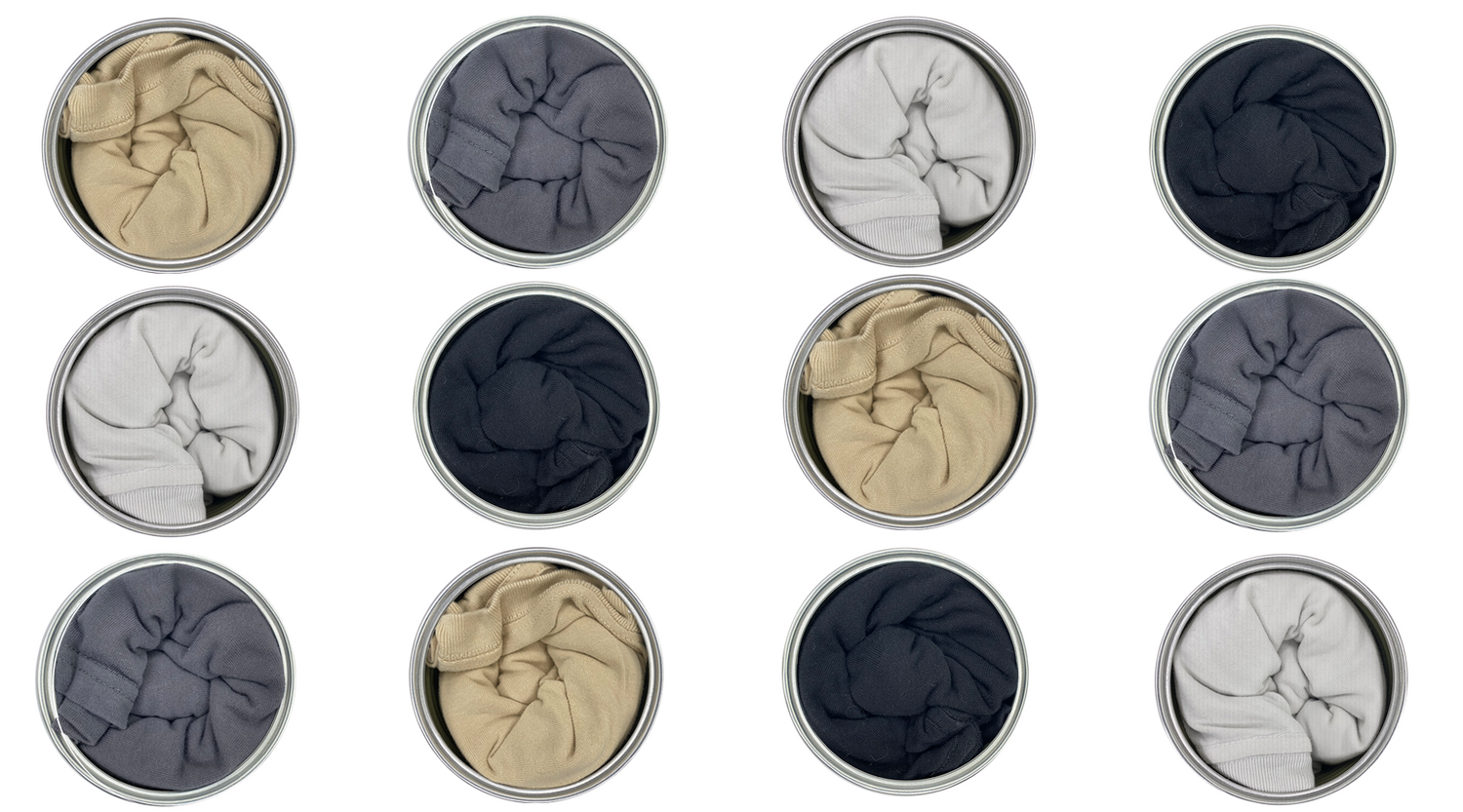
A folded shirt in a polybag is a garment. The same shirt in a printed container is an object, and an object gets opened, photographed, and kept. We seal custom tees inside aluminium cans with a pull tab, which is a format breweries tend to understand faster than anyone else, because you already put your brand on a can for a living.
Every stockist gets artwork that exists nowhere else. Jacks Surfboards carries them across more than five locations, and the opening videos have passed 100 million views across Instagram and TikTok, with a single reel at 8.3 million.
The inventory risk nobody mentions
Apparel has a failure mode glassware does not: sizing.
Order a run of shirts and you are not buying one product, you are buying six, and you will be wrong about the split. The usual result is a pile of XS and XXL that never clears, quietly eating the margin the mediums made. Every brewery that has done merch for more than a season has that box in the back.
Three things reduce it. Skew your order toward the middle harder than feels right, because the distribution is tighter than suppliers' standard splits assume. Keep runs small enough that a bad split costs a little rather than a lot. And put a genuine effort into anything one-size, because a cap, a patch, or a glass has no split to get wrong and no dead stock at the end.
Festivals and events
A festival is a different retail environment and most breweries bring taproom stock to it, which underperforms.
Nobody at a festival wants to carry a shirt around for six hours. Small, pocketable, and cheap wins: stickers, pins, openers, koozies. Anything that fits in a back pocket sells at volume; anything that needs a bag does not.
The event is also the best possible place to sell something people cannot get later, because the audience is already primed for one-off releases by the beer. A design that exists only at that festival, sold only that weekend, is the cleanest version of the drop mechanic there is.
A sensible first year
If you are rebuilding merch from a standing start:
- One evergreen piece that is genuinely wearable and always in stock. This is your baseline.
- Three or four drops a year tied to real occasions, in runs small enough to sell through.
- A counter item under impulse price that requires no sizing.
- One collaboration with a business your regulars already like.
That is a merch programme rather than a rack, and it produces a reason to talk to your audience four or five times a year instead of never.
More on why exclusivity drives this in what makes a souvenir collectible, the format itself in what a shirt in a can actually is, and the custom process on the custom cans page.